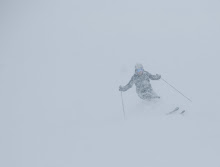
Poetry. The mere word evokes rhythm and emotion. Sensuous, frivolous, silly, strong, captivating. Poetry is part of life and not often read. Yet, I have found myself looking for poetry in the unexpected. For the past few months, I have looked for poetry in road signs, in journals, in newspaper headlines and in e-mails. And, I have found that poetry does appear where least expected. Just last weekend, I found a bulletin board full of actual poems outside a public washroom. Some of the poems were serious; others were limericks.
I believe that I am looking for poetry, without picking up a book, because poetry implies flow. Mihaly Csíkszentmihályi writes about flow in stern almost academic prose. His writing is not poetry but his ideas about flow are. In an interview, Csíkszentmihályi described flow as "being completely involved in an activity for its own sake. The ego falls away. Time flies. Every action, movement, and thought follows inevitably from the previous one, like playing jazz. Your whole being is involved, and you're using your skills to the utmost." To achieve a flow state, a balance must be struck between the challenge of the task and the skill of the performer. If the task is too easy or too difficult, flow cannot occur."
That every action, movement and thought follows from the previous one is the appeal of found poetry to me. Not all poems have flow but many words and thoughts printed in ordinary prose become poetic when flow is present. The melody is there, and resonance, and message. Poetry is individual and authentic. It is part of life. Poetry helps communicate and define emotion: joy, catharsis, anger, fear, love. Language alone is not a bridge to channel feelings from one person to another. Language, turned to poetry, is the bridge. For poetry to flow, the challenge for the writer is the careful selection of words and the challenge for the reader is skillful interpretation.
I am looking for poetry because I am looking for truth and beauty. Finding poetry, where unintended, requires me to use my my aptitude for language to my utmost. Finding poetry is part of my path.
Wednesday, March 5, 2008


Thursday, February 28, 2008
Unfolding serenity

February has flown by. I have been busy. Busy with work, busy with family, busy with fun. But, have I been too busy? Maybe, maybe not. The month has flown by and, by and large, I have gone with the flow. I made plans but situations changed, and I altered my plans. The biggest difference for me in this month versus similar past busy months is that I didn't over-analyze things. Some of the situations (almost all) were not within my control. In the past, I would have questioned what I could or could not have done differently to affect the outcome. This month, I recognized that what was done was done and I can only control how I feel at any given moment. I realized that I can influence how I choose to feel.
This made it much easier to be in the moment. It was almost as if I were an observer, watching a flower unfold. During the month it rained (figuratively) but instead of seeing this as dampening effect, I chose to see it as providing moisture to nourish future growth. During the month, winds of gossip and dissension swirled in my vicinity. I chose to step aside and watch as the winds dissipated. During the month, I developed my ability to let the right things be. I've been familiar with the "Serenity Prayer" since I was a teenager and I have tried to live by its precepts for many years. This was the month, in which I allowed myself to live by its precepts. For a stormy month, February was indeed serene. Serenity is a flower, pink and yellow, soft and fragrant. Serenity unfolds in warmth and closes with cold. It is everblooming but requires fertilizing. Life can be serene.
"God grant me the serenity
to accept the things I cannot change;
courage to change the things I can;
and the wisdom to know the difference.
Living one day at a time; enjoying one moment at a time...."
- Rheinhold Neibuhr
Friday, February 15, 2008
The end in sight

I was driving home from the mountains last Sunday night after a great powder day. Since snow is a necessary ingredient for powder skiing, the drive home was bound to have its challenges. Initially, the roads were clear of fresh or blowing snow and we drove along with traffic out of the mountains, through the rolling hills, and back into prairie. It was on the long stretch of highway between Calgary and Edmonton that the sky let loose its torrent of snow. Within seconds the visibility went from good to nil. The snowflakes were large, the wind was high, and all I could see was a small ridge of snow marking where other cars had driven. If I looked up from the snow covered pavement, I saw flakes swirling at me and had no sense of where the road curved.
I was the lead car. There were no distant red tail-lights to follow. I slowed to a comfortable pace (well under half the speed limit) and thought "I will just drive and soon we will be through the storm". Stopping was not an option because 1) I wasn't sure where the lane ended and the shoulder began, 2) cars might not see me stopped and 3) I wasn't sure where shoulder of the road ended and the ditch beside began. So I drove. My friend kept reassuring me that I was doing a good job navigating through the whiteness.
The storm abated just a tad and some impatient drivers decided to pass, resulting in snow from their tires flying up and creating clouds of whiteout that were even more blinding than nature's. I swore. I swore like a stevedore. My friend and I then had a good laugh. Our laughing stopped when a red car passed to the left and moments later we saw its tail-lights partially buried in the ditch dividing the highway.
The storm seemed to go on and on. I checked the clock. Fifteen minutes had gone by since the whiteout began, then twenty five minutes. The kilometres crept by and I realized that if things stayed the same, if the storm continued and I continued to drive at 40-50K, it would be two hours more of classic white-knuckle driving. It seemed as if there were no end in sight. I felt like I wouldn't be able to go on for two hours but stopping was still not an option, so I drove on.
About forty-five minutes into the poor driving conditions, visibility improved. Passing cars still spun the loose snow into mini-blizzards but there were respites when I could see. The end was in sight and I relaxed.
The interesting thing about relaxing once the end was in sight, is that I have a habit of doing this. I do it in rock climbing, I do it in driving, I do it in skiing, I do it in life. I wrote early in my blog about climbing in the gym with a blindfold on. It was a drill designed to help the belayer visualize moves rather than a drill for the actual climber. I found, however, that I climbed better not knowing where I was on the wall, not knowing whether I was close or far from the end. I climbed each move as I was directed. I was fully in the moment. The climb was relaxed and easy and I was surprised how quickly I reached the final hold. Ordinarily, I would have sweated the climb until the last few moves and then relaxed and reached the pinnacle with ease.
I have this same habit of not relaxing until the end in my skiing. I received some feedback a few weeks ago that "once you have the end in sight, you ski well". This past weekend, I was told "once you get into your rhythm, your skiing is smooth". Knowing my prediliction for a good finish, I translated that into "once you have the end in sight, your skiing is smooth".
Apparently, learning to relax, whether or not the end is in sight, is one of those life lessons which is particularly important to me. I am therefore receiving the lessons in multiple forms. I believe that I have progressed; that I am no longer a novice but moving on to intermediate status. The end is not in sight, but I am moving forward.
I was the lead car. There were no distant red tail-lights to follow. I slowed to a comfortable pace (well under half the speed limit) and thought "I will just drive and soon we will be through the storm". Stopping was not an option because 1) I wasn't sure where the lane ended and the shoulder began, 2) cars might not see me stopped and 3) I wasn't sure where shoulder of the road ended and the ditch beside began. So I drove. My friend kept reassuring me that I was doing a good job navigating through the whiteness.
The storm abated just a tad and some impatient drivers decided to pass, resulting in snow from their tires flying up and creating clouds of whiteout that were even more blinding than nature's. I swore. I swore like a stevedore. My friend and I then had a good laugh. Our laughing stopped when a red car passed to the left and moments later we saw its tail-lights partially buried in the ditch dividing the highway.
The storm seemed to go on and on. I checked the clock. Fifteen minutes had gone by since the whiteout began, then twenty five minutes. The kilometres crept by and I realized that if things stayed the same, if the storm continued and I continued to drive at 40-50K, it would be two hours more of classic white-knuckle driving. It seemed as if there were no end in sight. I felt like I wouldn't be able to go on for two hours but stopping was still not an option, so I drove on.
About forty-five minutes into the poor driving conditions, visibility improved. Passing cars still spun the loose snow into mini-blizzards but there were respites when I could see. The end was in sight and I relaxed.
The interesting thing about relaxing once the end was in sight, is that I have a habit of doing this. I do it in rock climbing, I do it in driving, I do it in skiing, I do it in life. I wrote early in my blog about climbing in the gym with a blindfold on. It was a drill designed to help the belayer visualize moves rather than a drill for the actual climber. I found, however, that I climbed better not knowing where I was on the wall, not knowing whether I was close or far from the end. I climbed each move as I was directed. I was fully in the moment. The climb was relaxed and easy and I was surprised how quickly I reached the final hold. Ordinarily, I would have sweated the climb until the last few moves and then relaxed and reached the pinnacle with ease.
I have this same habit of not relaxing until the end in my skiing. I received some feedback a few weeks ago that "once you have the end in sight, you ski well". This past weekend, I was told "once you get into your rhythm, your skiing is smooth". Knowing my prediliction for a good finish, I translated that into "once you have the end in sight, your skiing is smooth".
Apparently, learning to relax, whether or not the end is in sight, is one of those life lessons which is particularly important to me. I am therefore receiving the lessons in multiple forms. I believe that I have progressed; that I am no longer a novice but moving on to intermediate status. The end is not in sight, but I am moving forward.
Saturday, February 2, 2008
Fee, Fi, Fo, Fear
Physical fear is easy to understand. I know what it is like to ride a bicycle and catch a barefoot pinkie toe on a rock as I round a corner. I know what it is like to caroom down a paved hill on rollerblades, miss the turn, and slide into pavement and grass. I know what it is like to have road rash oozing through clothes making it difficult to sit. I know what it is like to have a bruise as big as a basketball on my thigh and have it last for four months. And I've been lucky.
Emotional fear is more difficult to understand. When I first began my journey from fear into fun, I recall a therapist asking me "what was I afraid of ?" He asked the question because I was frozen with fear, unable to move, unable to change or grow. I had no answer. Intellectually, I knew that any answer I gave had a rebuttal, but the fear that resided in me was primal, emotional, and impervious to logic.
I began to break through my emotional fear by acting on my physical fears, and through physicality become connected again to my self. I came across a quote "As you go the way of life, you will see a great chasm. Jump. It is not as wide as you think" - Joseph Campbell. Just imagining life in terms of movement helped me break free.
With movement and freedom, I began to see my fears. I feared that I was not good enough. I feared that I might fall, that I might fail, and especially that I might not fall (my obfuscating but very true way of saying that I am afraid to succeed). The first time that I heard a friend say that she feared that she was "too much", I did not understand. I am moving toward understanding that fear now. This quote from Nelson Mandela has helped:
"Our greatest fear is not that we are inadequate, but that we are powerful beyond measure. It is our light, not our darkness, that frightens us most. We were born to make manifest the glory of God within us. It is not just in some; it is in everyone. And, as we let our own light shine, we unconsciously give other people permission to do the same."
Nelson Mandela is right. It is scary to let our own light shine and yet other people, famous and otherwise, do it all the time. When I see Bruce Springsteen perform live, I sense his joy and
others become happier. When I watch figure skaters or skiers glide effortlessly, I move in synchronicity. When I watch "The Dancing Boy" move to the beat of his music and that of traffic on Edmonton street corners, his light shines and others become happier. I know that I am scared to let my light shine. This is the fear that inhibits me most right now, but I do know that when I break through that fear, I feel joy. And so, when I teach skiing, when I teach university classes, when I am with family and friends, when I rock climb or when I write, I know I am successful when I shine with who I am. Shine on.
Namaste,
Ginny
Emotional fear is more difficult to understand. When I first began my journey from fear into fun, I recall a therapist asking me "what was I afraid of ?" He asked the question because I was frozen with fear, unable to move, unable to change or grow. I had no answer. Intellectually, I knew that any answer I gave had a rebuttal, but the fear that resided in me was primal, emotional, and impervious to logic.
I began to break through my emotional fear by acting on my physical fears, and through physicality become connected again to my self. I came across a quote "As you go the way of life, you will see a great chasm. Jump. It is not as wide as you think" - Joseph Campbell. Just imagining life in terms of movement helped me break free.
With movement and freedom, I began to see my fears. I feared that I was not good enough. I feared that I might fall, that I might fail, and especially that I might not fall (my obfuscating but very true way of saying that I am afraid to succeed). The first time that I heard a friend say that she feared that she was "too much", I did not understand. I am moving toward understanding that fear now. This quote from Nelson Mandela has helped:
"Our greatest fear is not that we are inadequate, but that we are powerful beyond measure. It is our light, not our darkness, that frightens us most. We were born to make manifest the glory of God within us. It is not just in some; it is in everyone. And, as we let our own light shine, we unconsciously give other people permission to do the same."
Nelson Mandela is right. It is scary to let our own light shine and yet other people, famous and otherwise, do it all the time. When I see Bruce Springsteen perform live, I sense his joy and
others become happier. When I watch figure skaters or skiers glide effortlessly, I move in synchronicity. When I watch "The Dancing Boy" move to the beat of his music and that of traffic on Edmonton street corners, his light shines and others become happier. I know that I am scared to let my light shine. This is the fear that inhibits me most right now, but I do know that when I break through that fear, I feel joy. And so, when I teach skiing, when I teach university classes, when I am with family and friends, when I rock climb or when I write, I know I am successful when I shine with who I am. Shine on.
Namaste,
Ginny
Thursday, January 31, 2008
Whimsy
Whimsy appeals to me. I don't like kitsch or outright puns, visual or verbal, but I like whimsical art and books. Interestingly, when I look up the definition, the appeal lessens.
whimsy
n 1: an odd or fanciful or capricious idea; "the theatrical
notion of disguise is associated with disaster in his
stories"; "he had a whimsy about flying to the moon";
"whimsy can be humorous to someone with time to enjoy it"
[syn: notion, whim, whimsy, whimsey]
2: the trait of acting unpredictably and more from whim or
caprice than from reason or judgment; "I despair at the
flightiness and whimsicality of my memory" [syn:
flightiness, arbitrariness, whimsicality, whimsy,
whimsey, capriciousness]
Definitions aside, I still am attracted to whimsy. The triad of pictures hanging over my fireplace is whimsical. All three are of animals, a fox, an antlered deer, and a bighorn sheep. Two have wings. All three have curlicues in the backgound or foreground. I interpret the background swirls as stars. Those in the foreground I believe are snow. In my imagination, these animals evoke mythical archetypes. They are guardians, tricksters, angels. They are playful and yes, with wings, they are flighty. I look at them and I see nature, strong and powerful - nature, light and capricious.
I have a serious piece of art in my living room. It depicts clouds. Yet, when I look at it, the impression it leaves depends on my mood. Sometimes I see the clouds as mittens joining together. Sometimes, I see the clouds as menacing convergence. Gazing at clouds and the sky is freeing and when I look at my art, I am free to fly, to let my imagination roam, to be free of reason or judgement. Most would not call this piece of art whimsical but there in an element of freedom and lightness in the subject matter.
To be free or reason or judgement. This is why whimsy appeals to me. For someone who has lived in her head, who is over-educated and still subscribes to three daily newspapers, the notion of being free of reason, and especially judgement is compelling. Whimsy removes the need to think. I can just feel and not worry what others think. Whimsy is my explanation for the unexplainable, for the magic in the world. Whimsy is fun and odd. I like whimsy, and like magic, I believe we need more of it in the world.
whimsy
n 1: an odd or fanciful or capricious idea; "the theatrical
notion of disguise is associated with disaster in his
stories"; "he had a whimsy about flying to the moon";
"whimsy can be humorous to someone with time to enjoy it"
[syn: notion, whim, whimsy, whimsey]
2: the trait of acting unpredictably and more from whim or
caprice than from reason or judgment; "I despair at the
flightiness and whimsicality of my memory" [syn:
flightiness, arbitrariness, whimsicality, whimsy,
whimsey, capriciousness]
Definitions aside, I still am attracted to whimsy. The triad of pictures hanging over my fireplace is whimsical. All three are of animals, a fox, an antlered deer, and a bighorn sheep. Two have wings. All three have curlicues in the backgound or foreground. I interpret the background swirls as stars. Those in the foreground I believe are snow. In my imagination, these animals evoke mythical archetypes. They are guardians, tricksters, angels. They are playful and yes, with wings, they are flighty. I look at them and I see nature, strong and powerful - nature, light and capricious.
I have a serious piece of art in my living room. It depicts clouds. Yet, when I look at it, the impression it leaves depends on my mood. Sometimes I see the clouds as mittens joining together. Sometimes, I see the clouds as menacing convergence. Gazing at clouds and the sky is freeing and when I look at my art, I am free to fly, to let my imagination roam, to be free of reason or judgement. Most would not call this piece of art whimsical but there in an element of freedom and lightness in the subject matter.
To be free or reason or judgement. This is why whimsy appeals to me. For someone who has lived in her head, who is over-educated and still subscribes to three daily newspapers, the notion of being free of reason, and especially judgement is compelling. Whimsy removes the need to think. I can just feel and not worry what others think. Whimsy is my explanation for the unexplainable, for the magic in the world. Whimsy is fun and odd. I like whimsy, and like magic, I believe we need more of it in the world.
Monday, January 28, 2008
Two sides of being a sponge
I was thinking today about sponges, and realized that there at least two sides of being a sponge (and no, I don't mean one side is for scrubbing and the other is for soaping). I was thinking that being told I am a sponge means that I am absorbing others' fears, thoughts, anxieties, opinions and energies. I tend to think of being a sponge as negative, as taking on the unhappiness. But what if the reverse were true? What if I were a sponge and took on the happiness, excitement, joy and positive energies of others?
I was also thinking that being a sponge means that even if I harden a bit, it just takes a bit of moisture to soften me again. To be hard is to be inflexible, to be unable to bend with the wind, the snow, or the weight of life. A hard sponge breaks apart and has no purpose. A soft sponge is like a cushion, able to blunt life's impacts.
I was thinking of other analogies for being strong and soft at the same time (and, no, toilet paper ads don't count). I was thinking of willow trees and toasted marshmallows. I was thinking of chocolate covered soft ice cream and wind in all its incarnations. I was thinking of how I like to be when I ski moguls. But these other analogies don't have the same resonance for me as does being a sponge.
Being a sponge is personal to me. I was once given a sponge to carry as a reminder not to be one. Being a sponge is part of who I am. There are two sides to that sponge, a soft side and a dry side. The soft side allows me to be empathetic, to feel others' feelings. The other, dry, side lets me absorb others' feelings. The risk with absorption is that the feelings are overwhelming. In the past, when overwhelmed, I would retreat, avoid, and dry up. A pivotal point in my journey from fear into fun occurred when I was watching the movie, The English Patient. There is a scene where the patient, who has been completely burned, is brought outside on a stretcher. It begins to rain. I felt like I was that dry parched soul feeling the healing moistness of that rain. I opened up and began sobbing. It was the first time that I had really cried in years. Once I softened in that way, tears continued to come when they needed to. And so, I am still a sponge open to others' feelings and energies, but I am learning to take on only what I choose.
P.S. I realize that this sponge analogy is open to many spoofs (just like that more famous cartoon sponge). Oh well, at least, I live in a cold climate rather than undersea in a pineapple.
I was also thinking that being a sponge means that even if I harden a bit, it just takes a bit of moisture to soften me again. To be hard is to be inflexible, to be unable to bend with the wind, the snow, or the weight of life. A hard sponge breaks apart and has no purpose. A soft sponge is like a cushion, able to blunt life's impacts.
I was thinking of other analogies for being strong and soft at the same time (and, no, toilet paper ads don't count). I was thinking of willow trees and toasted marshmallows. I was thinking of chocolate covered soft ice cream and wind in all its incarnations. I was thinking of how I like to be when I ski moguls. But these other analogies don't have the same resonance for me as does being a sponge.
Being a sponge is personal to me. I was once given a sponge to carry as a reminder not to be one. Being a sponge is part of who I am. There are two sides to that sponge, a soft side and a dry side. The soft side allows me to be empathetic, to feel others' feelings. The other, dry, side lets me absorb others' feelings. The risk with absorption is that the feelings are overwhelming. In the past, when overwhelmed, I would retreat, avoid, and dry up. A pivotal point in my journey from fear into fun occurred when I was watching the movie, The English Patient. There is a scene where the patient, who has been completely burned, is brought outside on a stretcher. It begins to rain. I felt like I was that dry parched soul feeling the healing moistness of that rain. I opened up and began sobbing. It was the first time that I had really cried in years. Once I softened in that way, tears continued to come when they needed to. And so, I am still a sponge open to others' feelings and energies, but I am learning to take on only what I choose.
P.S. I realize that this sponge analogy is open to many spoofs (just like that more famous cartoon sponge). Oh well, at least, I live in a cold climate rather than undersea in a pineapple.
Sunday, January 27, 2008
Coming to neutral
Right now, in my skiing, I am working on coming to neutral as I begin a new turn. The reason that I need to come to neutral is to re-balance and establish a stable platform for the new turn. I've been visualizing and thinking about this part of the turn for most of the week, and as usual, my thoughts didn't follow a linear path but moved laterally (which is actually what I want to do when I ski). My thoughts turned to the life lesson inherent in coming to neutral before beginning a new turn.
Many of my friends are programmed to go, go, go. To stop and be with alone with themselves is a feeling never learned or abandoned. I suspect at least some of my friends are afraid to be alone with themselves. This makes me sad because they are missing out on knowing their own inner richness and beauty. To actually stop is scary so I have been reflecting on the notion of coming to neutral as a means of helping them see that that constantly going is a recipe for imbalance just as flipping from edge to edge when skiing will eventually cause imbalance.
Years ago, I also was afraid to be alone with myself. I was a classic type A achiever and if someone suggested that I might want to try yoga or meditation, my reaction was "yuck, that is too slow for me". I would go into the office on weekends. I recall flying to Calgary on a Sunday afternoon after one of my daughter's birthday parties. I didn't take summer holidays when others were off because I believed that I would then attend higher-profile meetings in their absence. When I wasn't at work, I would bury myself in a book, sometimes reading even as I stirred the pasta pot. On a Sunday afternoon, I would feel the urge to go to the mall just because I thought I had nothing else to do. I have learned now to be alone with myself. I can sit in a room and just be... When I am too busy, go, go going, I yearn for that time alone with myself and deliberately carve out a time and place. I did, however, learn to be alone by taking small steps. These steps, for me, were akin to coming to neutral.
My first small step was to begin a conscious program of exercise. Moving helped me reconnect with myself. My next steps involved long drives in the car with music. The drives had purpose; they were usually to and from the mountains but the time in the car was mine alone. From music in the car, I turned to music in the living room with headphones on. I began to pay attention when I cooked, to savor the aroma of garlic and red peppers sauteing in olive oil, to inhale the scent of oranges studded with cloves. And several years after I began re-balancing, I attended my first yoga class with one of those friends who, ironically, has not yet learned to come to neutral. Yoga is now a central part of my life and one of the means by which I pay attention to myself and the moment.
Life is a series of moments. They are all connected, just like one ski turn flows into the next. The lessons in my life are interconnected with my lessons from sport, which is precisely why I love sport so much. To move freely, to balance on edges, to un-edge, re-balance and move freely again are characteristics of skiing that embody many of the qualities that I want in my life. Coming to neutral is necessary to be balanced and I aspire to that flow in both skiing and life.
Namaste,
Ginny
Many of my friends are programmed to go, go, go. To stop and be with alone with themselves is a feeling never learned or abandoned. I suspect at least some of my friends are afraid to be alone with themselves. This makes me sad because they are missing out on knowing their own inner richness and beauty. To actually stop is scary so I have been reflecting on the notion of coming to neutral as a means of helping them see that that constantly going is a recipe for imbalance just as flipping from edge to edge when skiing will eventually cause imbalance.
Years ago, I also was afraid to be alone with myself. I was a classic type A achiever and if someone suggested that I might want to try yoga or meditation, my reaction was "yuck, that is too slow for me". I would go into the office on weekends. I recall flying to Calgary on a Sunday afternoon after one of my daughter's birthday parties. I didn't take summer holidays when others were off because I believed that I would then attend higher-profile meetings in their absence. When I wasn't at work, I would bury myself in a book, sometimes reading even as I stirred the pasta pot. On a Sunday afternoon, I would feel the urge to go to the mall just because I thought I had nothing else to do. I have learned now to be alone with myself. I can sit in a room and just be... When I am too busy, go, go going, I yearn for that time alone with myself and deliberately carve out a time and place. I did, however, learn to be alone by taking small steps. These steps, for me, were akin to coming to neutral.
My first small step was to begin a conscious program of exercise. Moving helped me reconnect with myself. My next steps involved long drives in the car with music. The drives had purpose; they were usually to and from the mountains but the time in the car was mine alone. From music in the car, I turned to music in the living room with headphones on. I began to pay attention when I cooked, to savor the aroma of garlic and red peppers sauteing in olive oil, to inhale the scent of oranges studded with cloves. And several years after I began re-balancing, I attended my first yoga class with one of those friends who, ironically, has not yet learned to come to neutral. Yoga is now a central part of my life and one of the means by which I pay attention to myself and the moment.
Life is a series of moments. They are all connected, just like one ski turn flows into the next. The lessons in my life are interconnected with my lessons from sport, which is precisely why I love sport so much. To move freely, to balance on edges, to un-edge, re-balance and move freely again are characteristics of skiing that embody many of the qualities that I want in my life. Coming to neutral is necessary to be balanced and I aspire to that flow in both skiing and life.
Namaste,
Ginny
Subscribe to:
Posts (Atom)